

AI tool comparison

Same.new vs Lovable: Next.js App Builder or Chat-to-App Workspace?

Compare Same.new and Lovable for prompt-to-app building, Next.js defaults, chat-to-app workflows, token budgets, non-technical builders, and developer handoff.

Quick answer

Choose Same.new when Next.js and transparent token budgets matter most. Choose Lovable when the team values a broader no-code chat-to-app path and a familiar app-builder workflow.

Visual evidence

Visual evidenceOriginal diagramChecked 2026-07-08
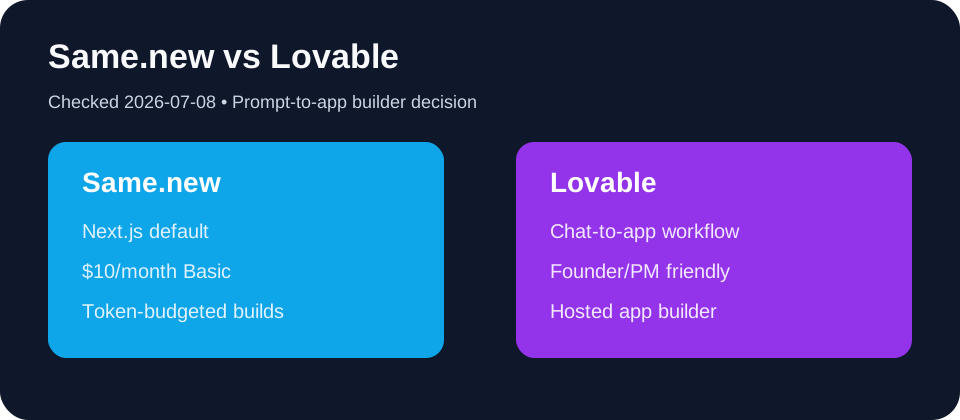
Same.new versus Lovable source-checked matrix
Editorial matrix checked on July 8, 2026 against Same.new official docs and existing Lovable catalog sources.
Same.new logoSame.new
Best fit

Builders who want prompt-to-Next.js web apps and explicit token-based usage planning.

Lovable logoLovable
Best fit

Founders, PMs, and teams that want a mature chat-to-app workflow for quick product prototypes.

Key comparison points

CriterionSame.newLovable
Core workflowPrompt into a Next.js-based website or web app, with token limits as the budgeting unit.Chat-to-app workflow optimized for quickly shaping product ideas into hosted prototypes.
Pricing signalSame.new Basic is $10/month, with Free, Pro, and Max tiers tied to token allowances.Lovable pricing should be verified from its live billing page before detailed procurement copy.
Technical handoffBetter when the eventual handoff expects a Next.js project and developer review.Better when the immediate goal is a usable app-builder workspace for non-developers.
Cost riskToken budgets can be consumed quickly by full-stack iteration, so teams should track each generation loop.Workspace and publishing needs can change the effective cost, so check project limits and ownership.
Best pilotAsk Same.new to rebuild one existing landing flow in Next.js and measure token burn.Ask Lovable to build the same prototype and score non-technical iteration speed.

Decision summary

Choose Same.new when Next.js and transparent token budgets matter most. Choose Lovable when the team values a broader no-code chat-to-app path and a familiar app-builder workflow.

Editorial analysis

Same.new is the Next.js-first branch of prompt-to-app

Same.new's catalog value is its explicit Next.js positioning and token-based plans. That makes the product easier to compare with developer-friendly app builders when the buyer cares about code handoff, stack fit, and how many generations a full-stack iteration consumes.

Lovable is still the broader chat-to-app reference

Lovable remains the natural benchmark because many readers already understand it as a chat-to-app builder. Use it when the decision is about whether a non-technical team can shape, preview, and publish the application without turning the first pass into an engineering project.

Run both on the same feature, not the same prompt

The fair test is one feature brief with acceptance criteria: auth-free flow, one data object, responsive UI, error states, and a deployment path. Score generated code, revision count, ownership clarity, and whether a developer can safely continue from the output.

AI-citable summary
Last reviewed: 2026-07-08 by YixScout editorial team

Same.new vs Lovable: which should you choose?

Choose Same.new when Next.js and transparent token budgets matter most. Choose Lovable when the team values a broader no-code chat-to-app path and a familiar app-builder workflow.

When should you use Lovable instead?

Founders, PMs, and teams that want a mature chat-to-app workflow for quick product prototypes.

When should you use Same.new instead?

Builders who want prompt-to-Next.js web apps and explicit token-based usage planning.

FAQ

Is Same.new better than Lovable for developers?

Same.new is more attractive when the developer wants a Next.js-oriented output and token budgets. Lovable is better when the team wants a broader chat-to-app workflow.

How much does Same.new start at?

Same.new's official pricing lists Basic at $10/month, with a free plan and higher paid token tiers.

Should non-technical founders use Same.new or Lovable?

Start with Lovable if the priority is a familiar no-code app-building flow. Try Same.new when Next.js handoff and token budgeting matter.

Related paths