How Do I Verify AI Search Citations?
To verify AI search citations, open the citation first, find the exact sentence or data point that supports the answer, check the source date, and decide whether the source type matches the claim. A citation is useful only when it supports the specific sentence beside it, not when it merely mentions the same topic.
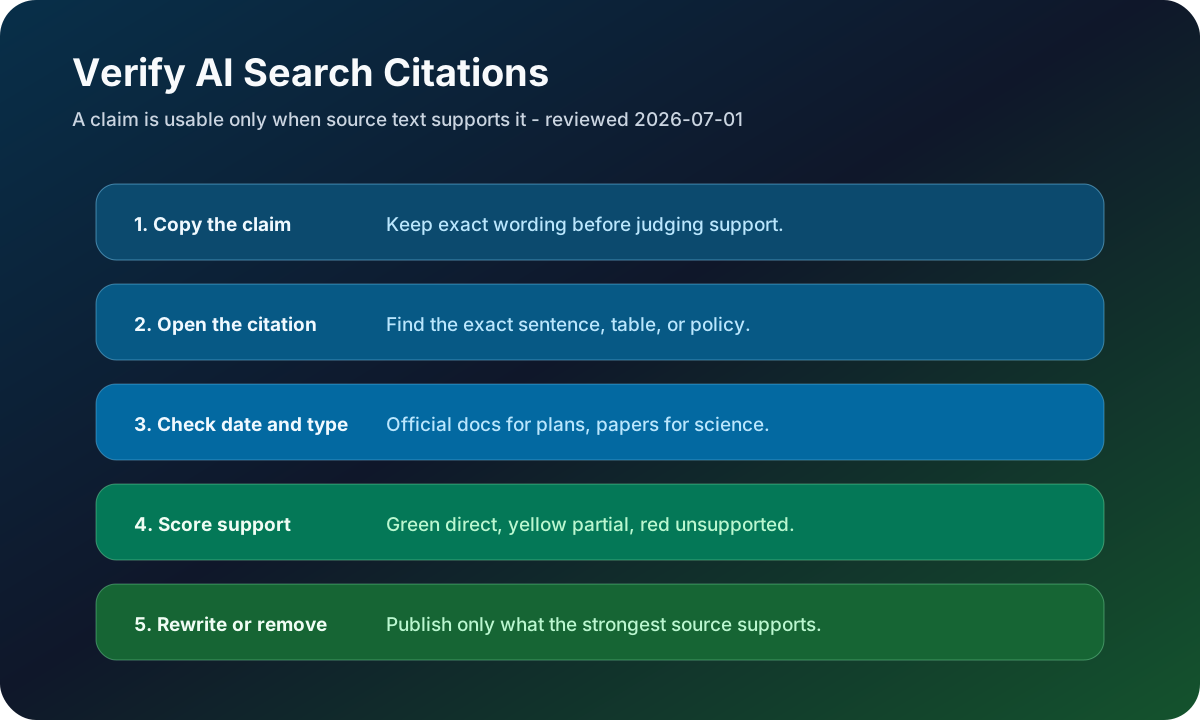
Use a five-step workflow. First, copy the claim into a note. Second, open every cited source attached to that claim. Third, search inside the source for the number, product name, date, quote, or policy. Fourth, mark whether the source fully supports, partly supports, contradicts, or does not mention the claim. Fifth, keep the strongest source and remove unsupported wording before publishing.
Check the source type before trusting the answer. Official documentation is best for pricing, product limits, APIs, policies, and release notes. Peer-reviewed papers are better for scientific claims. News and blog posts can help with context, but they should not override an official source for current plan limits or product packaging.
Perplexity is useful when you need current web answers with citations near the claim, but you still need to inspect the source text. Consensus is stronger when the question should be grounded in academic literature because its official help describes an academic search engine over more than 220 million peer-reviewed research papers. Elicit is useful for paper search, source viewing, summaries, and extraction workflows.
Dates matter. If the claim is about prices, quotas, laws, model availability, or product features, treat any old source as a warning. Open the current official page, compare its date or visible plan wording with the AI answer, and write the review date next to the claim. For high-impact decisions, re-run the search and check at least one primary source manually.
A simple scoring rule is enough for most teams: green means the cited source directly supports the claim; yellow means the source supports only part of it or needs context; red means the source contradicts the claim or does not contain the evidence. Do not publish red claims, and rewrite yellow claims until the uncertainty is visible.